


Our Story
For over 160 years the Amana Woolen Mill has survived floods, devastating straight line winds and disastrous fires, while riding the rises and falls of the American textile industry. Through it all, we continuously produced and supported generations of artisans and their families.
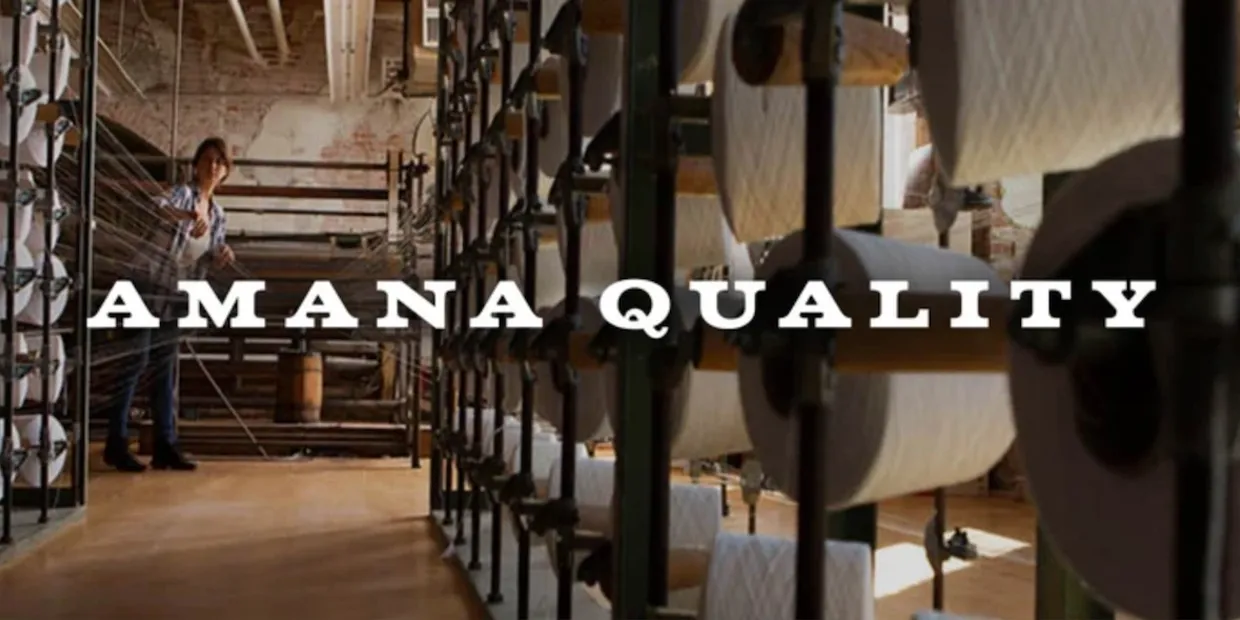
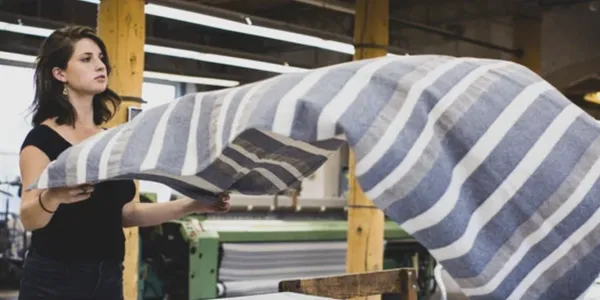
As Iowa’s only remaining textile mill, we believe in the importance of preserving the talent and ideas of American manufacturing. Production keeps our community strong. To this day, our makers continue to produce woven goods with the same set of standards in the original, century and a half old building where it all began.
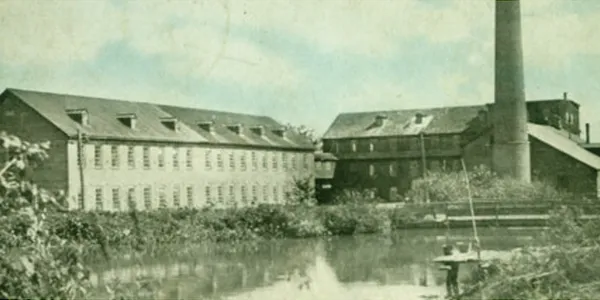
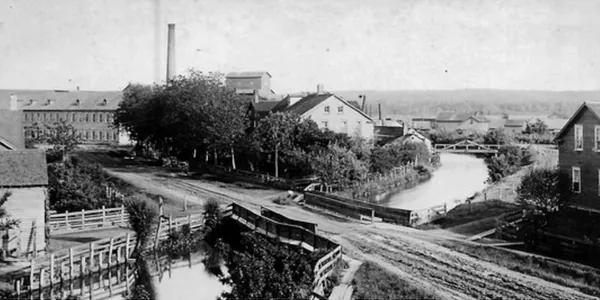
The 8-acre woolen mill complex sits alongside the Mill Race canal and was once the industrial center of the village of Amana. Textiles were essential to Amana’s beginnings. In addition to producing goods for the community’s use, the mill helped support the colonists’ communal living by selling textiles across the country, gaining a national reputation for superior woolens. Rich traditions of enduring quality, uncompromising craftsmanship, community living, and genuine hospitality have continued within its walls since 1855.
Our Journey From Germany to Iowa
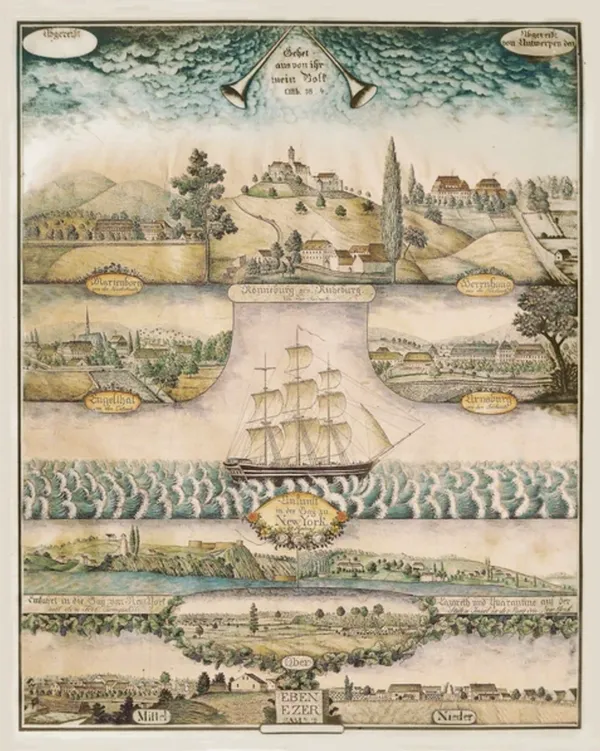
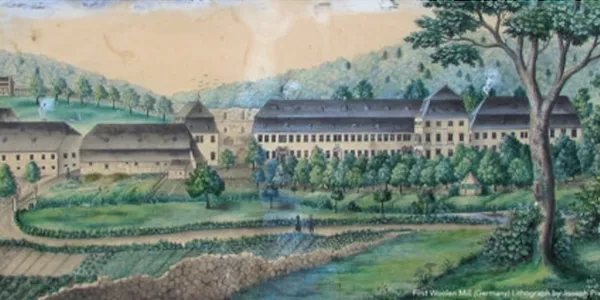
Amana’s history is reminiscent with that of America and shows the power of the American Dream. Dissatisfied with both temporal and spiritual governments, a community of families in Germany united together to establish their own schools and churches in 1714. For a long time, the community was prosperous in Germany as most members were farmers and craftsmen. Material support for the community was needed, therefore several small industries were founded. The largest industry established was a textile mill for carding, spinning and weaving woolens.
As political and religious persecution increased in Germany, the inspired community chose in 1843, to seek freedom in America. With a new home, named Ebenezer established near Buffalo, New York, came a decision to start anew and the community formed as a communal society. They farmed co-operatively and plied their respective trades. All property was held in common, and each member was given a job and was provided for all of their needs.
The building of a new mill in America would be decided immediately and would be one of the first industries within the new community. All usable machinery was crated and shipped across the Atlantic. The remaining property and machinery from the Germany mill would be sold and proceeds would be used to pay passage for eight hundred of the less fortunate members.
By 1852, the community had two woolen mills in New York and was producing flannels, stockings and blankets sold throughout the northern United States. Again, the community flourished, but found additional land was practically impossible to acquire due to the rapid growth of the city of Buffalo.
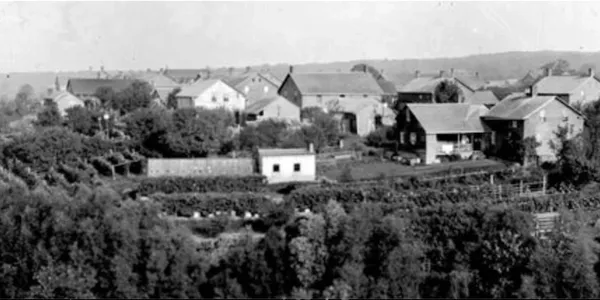
The newly formed state of Iowa would offer the opportunity to purchase affordable land with abundant resource. By 1855, a total of 25,000 acres would be bought and Amana would be formed. Construction would begin on six villages, all staggered an hour ox ride away from one another. Each would have their own churches, farm sites, homes and communal kitchens. Larger industries would be built in main Amana. A woolen mill again, would be one of the first to start up. To power the mill, a seven-mile canal was hand dug, from the Iowa River. Today, hydro-electricity is still generated at the same location at the Amana Woolen Mill.
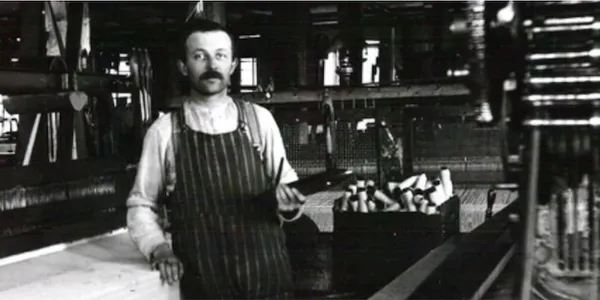
Communal living would continue in Amana until 1932, but it could not withstand the strains of the country's Great Depression. The community decided to end communal living, moving all land and businesses under a newly formed corporation. Each member of the community would receive shares in the new corporation, the Amana Society, Inc. Today, many craftsmen and community members continue to be either decedents or shareholders in the Amana Society.
Forever known as the “Great Change”, the transition away from communal living would affect almost everything in Amana. However, the community would remain tight-knit and continue to carry on the traditions of crafting quality products created by skilled craftsmen.
For the Amana Woolen Mill the “Great Change” would open the business up to national and local sales. A new salesroom opened in 1934 and Amana blankets began to be found in many homes, near and far.
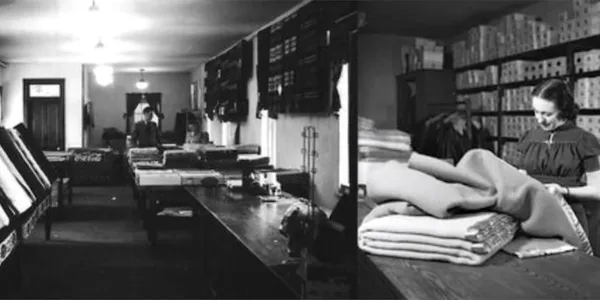
The years following the “Great Change” would bring lots of new and exciting business for the Amana Woolen Mill, large production runs and national wholesale sales would keep the looms running around the clock. The Woolen Mill salesroom would also prosper as the Amana Colonies quickly became one of the Midwest’s largest tourist destinations, welcoming hundreds of thousands of guests each year.
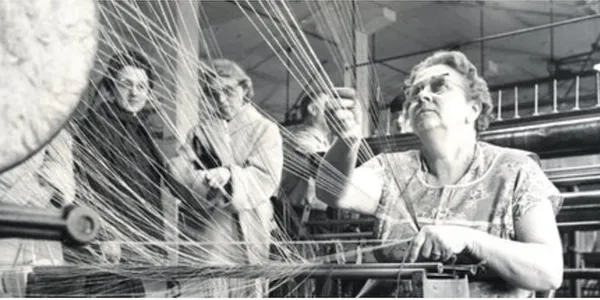
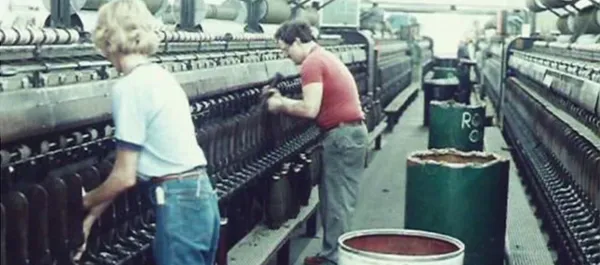
The early 80s would bring a hard decision for the Amana Woolen Mill and the Amana Society. Like so many others, the mill struggled to keep up with the growing trend of American companies manufacturing overseas. A decision would be made to restructure the business by closing down carding, dying and spinning operations. Honoring the heritage, a commitment was made to the Amana Woolen Mill, and weaving would remain operational in the original 1855 building. To continue the production, spun yarn would be purchased from other American mills.

Today, the mill is owned by a group of interested shareholders and run by a small, but passionate group of artisans, who are challenged every day to carry on the Amana legacy at the mill. Operating a small American textile factory is not easy, but it is the right thing to do.
American manufacturing continues to keep our community strong, and preserves the talent and ideals passed down to us by Amana’s founders.
Hotel Preservation: The Hotel Millwright Project

Downsizing our operations and closing the carding, dying, and spinning portions of the mill left many of the buildings empty or under-utilized for decades. Without a plan to rejuvenate the site, a critical part of the Amana story and an Iowa treasure would be lost. So, in 2013 Amana Society formed a committee whose goal was to preserve the physical structures that are an important part of Amana’s story. A search began for a new function for the mill complex, to better support the viability of the historic structures.
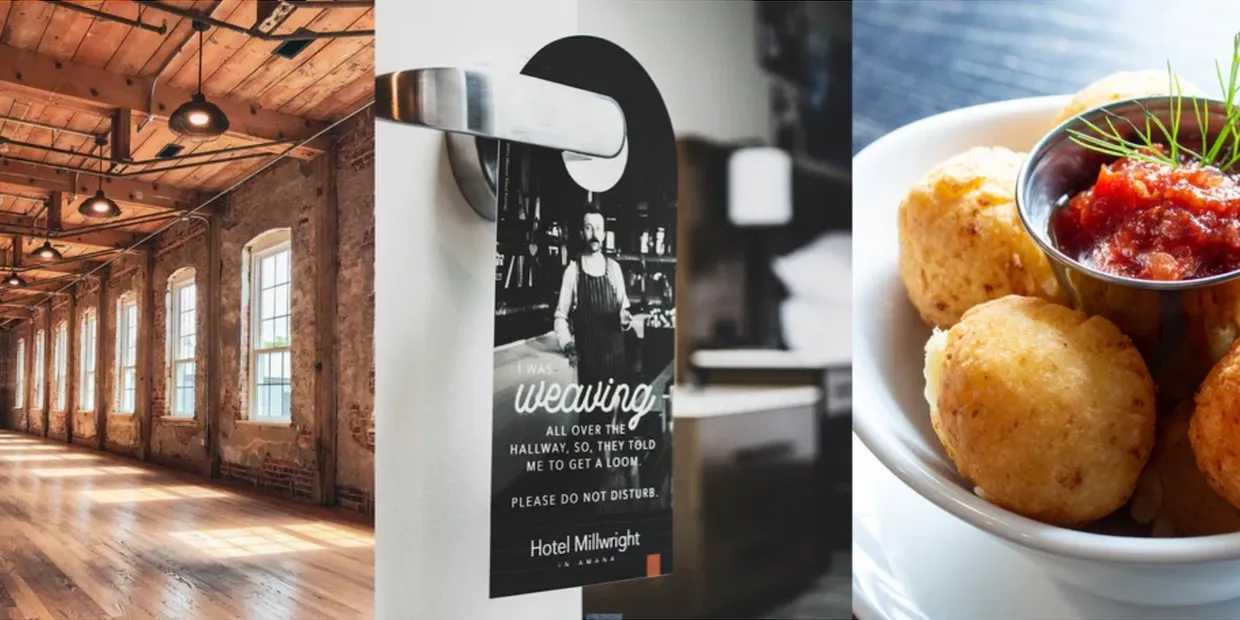
Results from a feasibility study found that the “best use” of the mill complex, as a whole, is a multi-use approach that enhances Amana’s position as a hospitality and entertainment destination. Build a boutique hotel with 65 guest rooms, two premier suites, a restaurant, two bars, modern retail spaces, and a 7,000 square foot banquet and conference center inside a working mill? We’re in!
The restoration began in the summer of 2018 and Hotel Millwright opened its doors in the fall of 2020.
Inspired by its rich history, the combination of original textile mill elements and modern industrial design create a one-of-a-kind overnight experience for both leisure seekers and business goers alike.
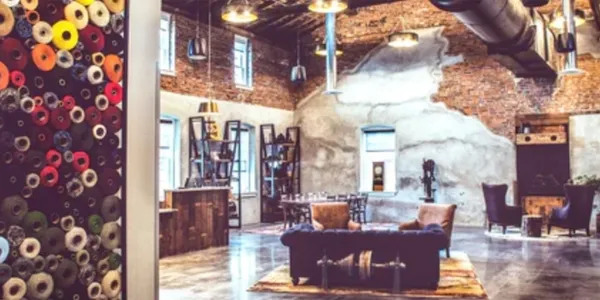
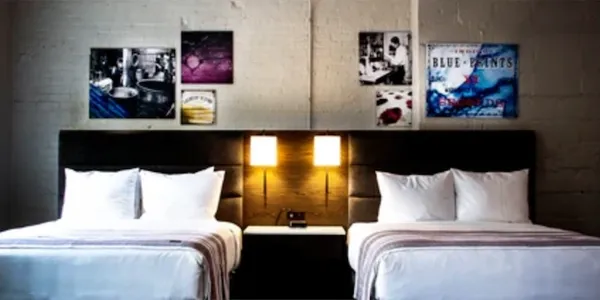
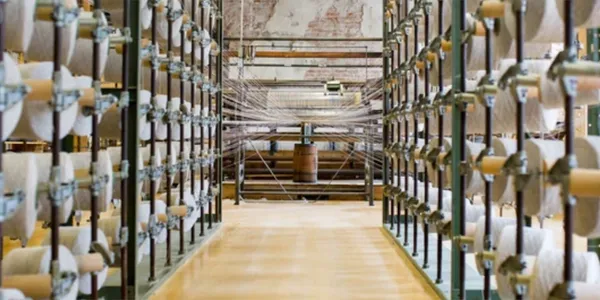
The working portion of Amana Woolen Mill is just steps away from Hotel Millwright’s lobby. Guests are encouraged to stop in and watch the looms at work, and to see where it all began.

Yes, the inside is impressive. The outside is too! From permeable paver streetscapes for stormwater runoff filtration, to 100% green electricity provided by the Amana Farms methane digester. We’re working hard to build an eco-conscious oasis with as little disruption to Mother Earth as possible. Fun fact: We’re the only place in Amana with electric car and Tesla charging stations.